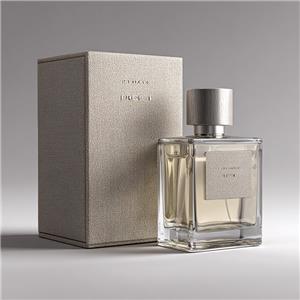
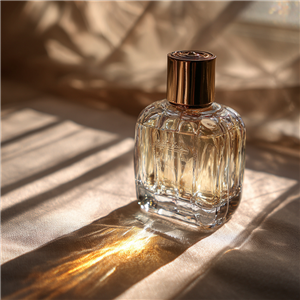
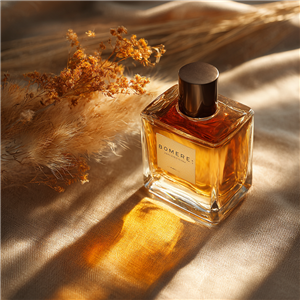
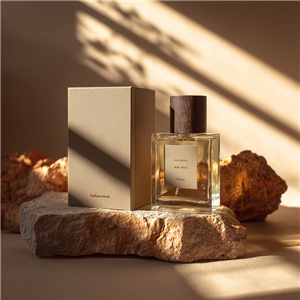
Design Perfume Bottle: Real-World Applications, Engineering Specs
Real-World Applications and Use Cases
1. Commercial Perfume and Essential Oil Packaging
The main use for a design perfume bottle is still commercial fragrance packaging.
That includes perfume, cologne, essential oil blends, room fragrance, private-label scents, and small luxury fragrance lines. For these products, the bottle does not just “contain” liquid. It shapes how customers judge the brand.
A clear glass bottle gives the fragrance a clean and premium look. It also allows the liquid color to show naturally, which matters a lot for brands using amber, pink, light gold, pale green, or transparent fragrance formulas.
In most retail perfume projects, a 15mm neck finish works well with fine mist sprayers. It gives a smooth spray and fits the structure buyers already know. But here is the catch. A standard neck size on paper does not always mean a stable neck size in production.
We have checked bottles that were supposed to use the same neck specification, but the pump fit felt different from batch to batch. One batch crimped well. Another batch needed more adjustment. A few bottles showed weak sealing after vibration tests.
Small difference.
Big trouble.
For alcohol-based perfume and essential oil packaging, the bottle, sprayer, gasket, and cap must work as one system. If one part does not match, the final product feels cheap, even when the glass itself looks beautiful.
2. Travel and Daily Commute Scenarios
Empty cologne bottles are also common for travel use.
People want smaller bottles for handbags, offices, cars, gyms, hotel stays, and carry-on luggage. That is why travel-size perfume bottles keep selling well. They solve a real problem. Nobody wants to carry a full-size fragrance bottle every day.
But travel is rough on packaging.
A bottle may sit sideways in a bag. It may get squeezed between cosmetics. It may face temperature changes in a car. During flights, pressure changes can make weak seals show their flaws fast.
We have seen small travel bottles pass a quick water test and still leak later when filled with alcohol-based fragrance. Why? Because alcohol moves differently from water. It finds tiny sealing gaps more easily.
So, for travel perfume bottles, buyers should not only ask whether the bottle looks compact. They should ask how the sealing structure works.
Does the inner plug fit tightly?
Does the sprayer lock well?
Does the cap protect the actuator?
Has the bottle passed inverted testing?
Has anyone tested it after shaking?
These questions sound basic. They are not. They prevent complaints.
3. DIY Cosmetics and Home Decor
There is another use case buyers often ignore.
After the fragrance runs out, many customers keep the bottle.
A good glass perfume bottle can become a container for homemade facial mist, diluted essential oils, reed diffuser liquid, or even a small decorative vase. Some customers place empty fragrance bottles on vanity tables simply because the bottle still looks good.
This may not seem important from a factory point of view.
But from a brand point of view, it matters.
When a customer keeps the bottle, the brand stays in their space longer. The packaging continues to create value after the perfume is finished. That is why the bottle needs to feel solid, clean, and reusable. A cloudy bottle, loose cap, peeling coating, or cheap-feeling pump will never get that second life.
People keep packaging when it feels worth keeping.
Engineering Experience and Technical Parameters
Material Science and Chemical Compatibility
Let’s be real. Most buyers cannot judge glass chemistry by looking at a sample.
A bottle can look clear, heavy, and expensive, but the glass composition may still be wrong for sensitive fragrance formulas. This is especially true when the perfume contains high alcohol content, acidic components, citrus oils, or volatile aromatic compounds.
Low-quality soda-lime glass with higher alkaline content can create problems over time. It may not ruin the fragrance immediately. That is what makes the issue tricky. The bottle may look fine during the first sample review. The fragrance may smell fine after filling.
Then, months later, the formula changes slightly. The liquid looks less clean. The scent feels different. The inner surface may develop a light haze.
Nobody wants to discover that after the product enters the market.
In our work, we prefer high borosilicate glass or neutral-treated ultra-clear glass for fragrance projects that need stronger chemical stability. These materials resist alcohol and acids better. They also help keep the perfume closer to its original formula during storage.
Does every perfume bottle need high borosilicate glass?
No.
That would be too simple.
For many standard perfume projects, good-quality soda-lime glass works well. But when the formula is more sensitive, the market positioning is premium, or the shelf-life requirement is strict, material choice deserves more attention.
The glass should not just look clean.
It should stay clean.
Structural Mechanics and Precision
We have noticed one pattern again and again: leakage often appears after shipping, not during sample approval.
That tells us the factory test did not always simulate real conditions.
A bottle can pass a short leak test when it sits still on a table. But international shipping does not let bottles sit still. Cartons shake. Pallets move. Containers vibrate. Temperature changes. The seal has to keep working through all of that.
One weak point is the neck finish.
If the neck thread or crimp area lacks precision, the pump may not sit evenly. If the pump does not sit evenly, sealing pressure becomes unstable. If sealing pressure becomes unstable, leakage risk increases.
That is usually how the problem starts.
Our production process uses CNC-machined molds to control dimensional tolerances within ±0.03mm. This helps keep the bottle neck more consistent during mass production. The wall thickness deviation stays below 0.1mm, which reduces structural weak points. The base thickness usually falls between 3.5mm and 6.2mm, depending on the bottle size, weight target, and design style.
Those numbers sound technical because they are.
But the point is very practical. A bottle with stable dimensions runs better on filling lines, seals better with pumps, and breaks less often during transport.
A thick base may look premium, but if the sidewall distribution is poor, the bottle can still fail.
That surprises many buyers.
Weight alone does not prove strength. Balance does.
Surface Treatment and Aesthetics
This is the part everyone enjoys choosing.
Frosted glass. Soft-touch coating. Vacuum metallized caps. Gold hot stamping. Silk-screen printing. Gradient spray color. Matte black. Transparent blue. Champagne finish.
The design options feel endless.
But surface treatment can become one of the biggest quality risks if the process is not controlled properly. We have seen coatings that looked perfect in the sample stage but started to peel after UV exposure. We have also seen hot stamping that rubbed off too easily because the surface preparation was poor.
The finish is not just decoration.
It is a performance layer.
For metallic caps, vacuum ion plating can create a strong premium look. For matte glass, chemical frosting gives a more natural texture than some cheap spray effects. For logos, silk-screen printing and hot stamping can both work well, but only when the glass surface stays clean and the curing process runs correctly.
We usually pay attention to cross-cut adhesion testing, scratch resistance, alcohol resistance, and UV exposure results. These tests may sound boring, but they tell you whether the bottle will still look good after real use.
Retail shelves are not gentle.
Customers pick up bottles. Staff wipe them. Light hits them every day. Boxes move around in warehouses. If the coating cannot handle that, the brand suffers.
Common Industry Pitfalls and Buyer Needs
Most packaging mistakes start early.
Too early, actually.
A brand approves the shape before confirming the pump. The designer chooses a coating before checking adhesion. The buyer asks for a heavy base before asking whether the bottle can run smoothly on the filling line. The sample looks nice, so everyone feels safe.
Then mass production exposes the problem.
We have seen this happen many times.
One common pitfall is crimp compatibility. A glass bottle can look perfect, but if the neck finish does not match the sprayer pump during mass production, the seal becomes unreliable. Some bottles may pass. Some may leak. That inconsistency is worse than a clear failure because it is harder to catch.
Another issue is coating delamination. A bottle finish may look beautiful under office lighting, but after prolonged UV exposure in a retail window, the coating begins to fade, crack, or peel. Once that happens, the product looks old before the customer even buys it.
Pump inconsistency also causes trouble. One bottle sprays a soft mist. Another spits. Another sprays sideways. The consumer does not care whether the fault comes from the pump supplier or the bottle supplier. They blame the perfume brand.
Fair or not, that is how customers think.
So buyers need more than a beautiful vessel. They need a complete packaging system.
Glass bottle.
Sprayer pump.
Collar.
Overcap.
Inner plug.
Gasket.
Carton.
Every part must work together.
In our experience, the smartest buyers ask for system testing before full production. They do not just approve one shiny sample and move forward. They ask for pump matching, filling tests, vibration testing, coating adhesion reports, and pre-production samples.
That is not being difficult.
That is being professional.
Frequently Asked Questions
Q1: What is the difference between high borosilicate glass and regular soda-lime glass for perfume bottles?
High borosilicate glass has a lower thermal expansion coefficient and stronger chemical stability. It handles alcohol, acids, and volatile fragrance ingredients better than ordinary low-grade soda-lime glass.
Regular soda-lime glass can still work for many perfume bottles, especially when the supplier controls the quality well. But cheaper soda-lime glass may leach alkali over time, which can affect delicate fragrance formulas.
So the better choice depends on the formula, market level, shelf-life requirement, and budget.
Q2: What is the standard minimum order quantity for a custom design perfume bottle?
For standard molds, the MOQ usually sits around 5,000 pieces.
For a fully custom bottle shape that needs a new mold, the MOQ usually starts at 10,000 pieces. That is because new mold development costs money, and the factory needs enough order volume to support the tooling work.
Here is our practical advice: if the brand is new, start with an existing mold and customize the color, logo, cap, or decoration first. Move to a private mold after the market proves the product can sell.
Q3: Can I get free samples before placing a bulk order?
Yes, most manufacturers can provide existing samples for quality checking.
Usually, the sample itself is free, while the buyer pays express shipping. If you need a customized pre-production sample with your logo, color, coating, or special cap, the factory may charge a sample fee.
That fee is often deducted from the bulk order later, depending on the supplier’s policy.
Samples are worth the effort. Photos hide too much. Real samples show the weight, color, pump feel, cap fit, glass clarity, and surface finish much better.
Q4: How long does the production and shipping process take?
Sampling usually takes 7 to 10 days.
After sample approval, standard bulk production often takes around 25 to 35 days. The exact schedule depends on the bottle quantity, mold condition, decoration method, cap material, and packing requirements.
Simple clear glass bottles move faster. Bottles with electroplating, frosting, spray coating, silk-screen printing, hot stamping, or vacuum metallization may need more time.
Rushing the finish process is rarely a good idea.
That is how coating problems start.
Q5: Are these glass perfume bottles environmentally friendly?
Yes, glass is 100 percent recyclable.
For brands that care more about sustainability, we can also offer Post-Consumer Recycled glass options and water-based low-VOC inks. These choices help brands meet stricter environmental expectations, including EU REACH-related requirements.
That said, sustainability should not weaken the package. A recycled-content bottle still needs stable clarity, reliable sealing, and strong structure. Eco-friendly packaging still has to perform.
Q6: What customization options are available for the bottle exterior?
There are many options.
Silk-screen printing works well for clean logos and text. Hot stamping gives a metallic brand effect. Embossing adds a permanent three-dimensional detail to the glass. Frosting creates a soft matte look. Spray coating allows almost any Pantone color. Vacuum metallization gives a strong metallic finish.
Buyers can also customize the cap, collar, pump, logo position, bottle color, surface texture, and outer packaging.
The key is not choosing every option.
The key is choosing the right options for the brand.
Q7: How do you ensure the bottles do not leak during transportation?
We check sealing before shipment through inverted pressure testing and vibration simulation.
The goal is simple: find weak seals before the bottles enter real transport. We also use high-precision injection-molded inner plugs and multi-layer gaskets to maintain an airtight seal.
Still, buyers should test the actual bottle and actual pump together. Not a similar pump. Not a temporary pump. The real one.
That is the only way to know whether the final packaging system works.
Q8: Do you provide matching accessories like caps and pumps?
Yes, we provide matching pumps, collars, and caps as part of a one-stop perfume packaging solution.
Common materials include ABS, Surlyn, Zamak, and stainless steel. Each material creates a different look, weight, cost level, and hand feel.
For premium projects, Zamak or stainless steel caps can add weight and a luxury feel. For lighter or cost-sensitive projects, ABS and Surlyn can work very well.
The important thing is compatibility. The cap should fit the bottle. The pump should match the neck. The full set should feel like one product, not separate parts forced together.
Conclusion
Choosing a design perfume bottle is not just about choosing a pretty shape.
A perfume bottle carries the fragrance, protects the formula, supports the brand image, and handles real-world stress from filling to shipping to daily use. If the engineering fails, the design loses its value.