How to Choose a Custom Perfume Bottle Manufacturer
Then there are custom mold perfume bottles.
A private mold makes sense when the shape itself carries the brand story. Perhaps the shoulder follows a flower petal. Maybe the heavy base creates a floating effect. Or the entire bottle uses a distinctive silhouette that competitors cannot easily copy.
This route requires more work. We review the concept, build a 3D model, create a prototype, produce the mold, run trial bottles, test the structure and send samples for approval.
At FORMENCE, new molds generally start from 10,000 pieces. Mold development usually takes about 25 to 30 business days.
There is no shortcut here. Glass needs time.
Bottle Design Is Also Engineering
A bottle looks like one object.
In reality, it contains a whole chain of tolerances.
Glass body
We control capacity, weight distribution, wall thickness, bottle height and vertical stability. A heavy base can create a premium hand feel, but more glass also changes cooling behavior, production cost and shipping weight.
More weight does not automatically mean more luxury.
Balance does.
Neck finish
The bottle neck controls pump compatibility. FEA crimp finishes need accurate dimensions so the pump seals correctly after crimping.
We pay close attention to this area because an attractive bottle with an inaccurate neck can leak, rotate or crimp unevenly. No decoration can hide that problem.
Pump and dip tube
The pump determines how the customer experiences the fragrance every day.
We check spray output, priming, dip-tube length, sealing and alcohol compatibility. Whenever possible, we recommend testing the selected pump with the buyer’s actual fragrance formula.
Water testing helps, but perfume formulas behave differently. That detail matters.
Cap and collar
A cap should sit straight, hold securely and leave enough internal clearance around the pump.
FORMENCE supplies plastic, acrylic, wood and Zamac cap options. For luxury projects, Zamac offers noticeable weight and supports complex shapes, engraving, embossing and plated finishes.
Still, we never select a cap by appearance alone. We check its grip, clearance, alignment and compatibility with the collar.
Decoration
We produce custom perfume bottles with logo through silk-screen printing, hot stamping, decals, UV printing, engraving, embossing and related processes.
Brands can also choose frosting, gradient spraying, matte coating, flocking, metallization and internal coating.
Look, the most complicated finish does not always create the best bottle. We prefer the finish that supports the brand and survives filling, packing, shipping and repeated handling.
A metallic logo that rubs off inside the box helps nobody.
Where Are Custom Perfume Bottles Used?
Niche fragrance launches
Independent fragrance houses often choose a 50ml bottle, a thick glass base and fairly restrained decoration.
Why?
They want the bottle to feel intentional without looking overworked. It also needs to photograph well because online stores, social media and product reviews may introduce the packaging before customers ever smell the fragrance.
Buyers searching 50ml custom perfume bottles wholesale often sit at this stage. They need a proven retail size, reasonable inventory planning and enough customization to build recognition.
Luxury retail collections
Projects involving luxury custom perfume bottles wholesale usually place greater emphasis on glass clarity, bottle weight, sculptural form, Zamac caps, metallic decoration and rigid gift boxes.
The packaging must communicate value immediately.
Before a shopper sprays the perfume, they see the bottle. Then they pick it up. They feel its weight, touch the cap and notice how smoothly the pump works.
That short interaction can support the price point or weaken it.
Hotel, gift and promotional ranges
These projects often use smaller capacities, stock molds and logo decoration. Buyers usually prioritize delivery time, consistency and cost control over an exclusive glass structure.
A standard shape can work perfectly well here. Smart decoration does most of the branding work.
OEM fragrance programs
An OEM perfume bottle manufacturer should coordinate more than the glass container.
The buyer may need a bottle, pump, collar, cap, box and crimping solution that all work together. When several unrelated suppliers provide these parts, compatibility problems can surface late in the project.
We prefer to check the complete assembly early.
Less drama. Fewer surprises.
A Design Case: From Shape to Shelf
One FORMENCE project started with a softer bottle concept inspired by natural forms.
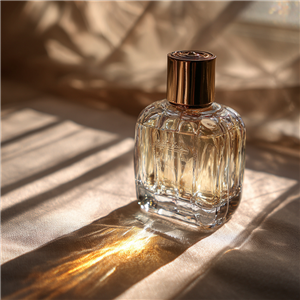
The early design used a flowing ribbed surface. Visually, the ribs added depth and caught the light. Functionally, they also improved grip. We liked the direction, but a good idea on screen still had to work as real packaging.
So we tested it.
Our team moved through 3D design, prototype review, mold development and sample testing. We checked the physical proportions, tactile feel and practical handling instead of relying only on renderings.
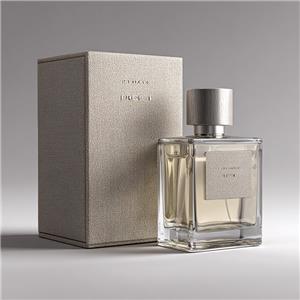
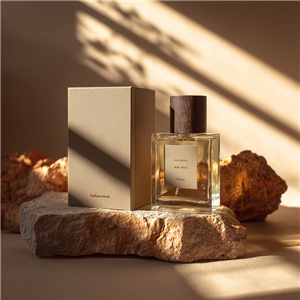
The final presentation paired the glass bottle with a minimalist box and metallic details. Bottle and box spoke the same visual language.
That project reinforced something we have learned through years of engineering work: begin with market positioning, then approve the design through physical samples.
A rendering explains shape.
A sample reveals weight, grip, color, cap fit and spray behavior.
Big difference.
How FORMENCE Produces Custom Perfume Bottles
FORMENCE brings 36 years of glass bottle manufacturing experience to design perfume bottles, standard perfume bottles, caps, pumps, packaging boxes and perfume crimping equipment.
We keep the project flow practical:
We confirm the target market, capacity, quantity and budget.
We review the bottle shape, neck, pump, cap and box structure.
We prepare drawings or 3D renderings.
We produce a prototype or decorate a stock bottle for sampling.
We develop and test the mold when the design requires a new structure.
We approve the glass, color, logo, pump performance and packaging.
We begin mass production and complete final inspection.
Our bottle-making equipment supports consistent glass forming. Coating and printing lines create matte, glossy, metallic, frosted and gradient finishes.
We also inspect the details buyers cannot easily see in a product photograph. Those checks can include dimensions, internal glass stress, leakage and surface condition.
Machines catch measurable problems. Experienced inspectors catch visual ones.
We need both.
Key Parameters to Send Your Supplier
| Parameter | Information buyers should provide |
| Capacity | 30ml, 50ml, 100ml or custom |
| Glass design | Stock shape, modified design or new mold |
| Neck | Crimp or screw; required specification |
| Pump | Spray dosage, color and dip-tube length |
| Cap | Plastic, acrylic, wood, Zamac or combination |
| Decoration | Printing, hot stamping, frosting, coating or engraving |
| Color | Pantone reference or approved physical sample |
| Box | Folding carton, rigid box, insert and surface finish |
| Quantity | Initial order and expected annual demand |
| Testing | Leak, fit, spray, coating adhesion and transport tests |
The more clearly buyers provide this information, the more accurately we can quote.
A reference photograph helps us understand the visual direction. It does not tell us the required neck size, bottle weight, coating standard or pump output.
We still need the details.
How Should You Compare Manufacturers?
Let’s be real. Buyers often compare unit prices first.
We understand why, but that number can mislead when suppliers include different services. One quotation may cover only the bare glass bottle. Another may include decoration, pump, cap, box and inspection.
Ask every supplier the same questions:
Is the bottle an existing mold or a private mold?
Who controls the mold after payment?
Are the pump, cap and bottle tested together?
Does the quote include decoration and individual packaging?
What defects does the inspection standard cover?
Will we receive a pre-production sample?
Can the supplier reproduce the same color on repeat orders?
What happens if the approved components do not fit?
We believe a reliable supplier should answer these questions directly.
If the answers remain vague before payment, they probably will not become clearer once production starts.
Frequently Asked Questions
1. What is the MOQ for custom perfume bottles?
FORMENCE stock bottles generally start from 1,000 pieces. A new custom glass mold normally starts from 10,000 pieces. Decoration MOQ depends on the selected bottle and process.
2. Can I add my logo without making a new mold?
Yes. We can apply silk-screen printing, hot stamping, decals, UV printing, labels and laser engraving to an existing bottle. An embossed glass logo normally requires mold work.
3. How long does a new perfume bottle mold take?
Custom mold development generally takes 25 to 30 business days. Sampling, design revisions and decoration approval require additional time before mass production.
4. What information is needed for a quotation?
Send us the capacity, bottle shape, quantity, neck type, pump, cap material, decoration, box style and destination. Reference images help us understand the style, while dimensions and expected annual volume help us prepare an accurate proposal.
5. Which perfume bottle size is most suitable for retail?
The 50ml format balances perceived value, shelf presence and shipping weight for many fragrance lines. Brands may add a 30ml option for entry-level sales and a 100ml option for customers who want more volume.
6. Can FORMENCE supply the bottle, pump, cap and box together?
Yes. We provide one-stop perfume packaging support, including glass bottles, pumps, collars, plastic, acrylic, wooden or Zamac caps, customized boxes and crimping equipment.
7. How do you check perfume bottle quality?
We use pre-production samples and final inspection. Depending on the project, we check dimensions, glass stress, leakage, surface defects, decoration adhesion, pump performance, cap fit and packaging protection.
Conclusion
Choosing a perfume bottle supplier really means managing risk inside a creative project.
We start with the fragrance position and target customer. Then we work through quantity, bottle structure, component fit, decoration, testing and reorder consistency.